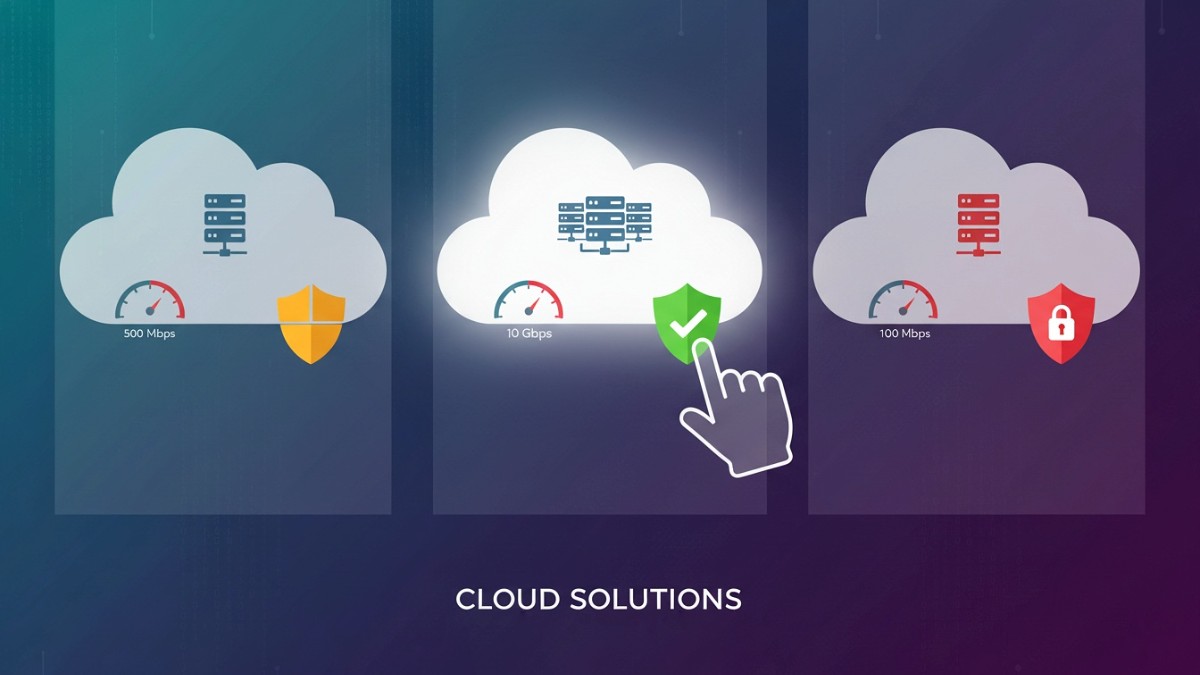
Best Cloud Hosting: When it comes to choosing cloud hosting for your small business, the marketing noise often overshadows what actually matters: genuine performance and real value for your budget. The cloud hosting landscape in 2025 is saturated with providers making bold claims about speed, reliability, and cost-effectiveness. However, separating marketing hype from genuine performance metrics reveals a more nuanced picture that small business owners need to understand before making their investment.
The Marketing Reality Check
The cloud hosting industry loves hyperbole. Providers frequently trumpet “lightning-fast speeds,” “100% uptime,” and “enterprise-grade performance” across their marketing materials. Yet real-world testing tells a different story. Performance benchmarks from November 2025 show that while most major providers deliver solid performance, the differences between top contenders are often marginal. What sets providers apart isn’t always the headline statistics but rather the consistency of their infrastructure and the support quality when issues arise.
One critical observation from recent industry data is that many small businesses are consolidating their technology stacks rather than chasing the latest cloud innovations. This shift reflects a deeper understanding: complexity doesn’t equal better performance. According to 2025 technology adoption patterns, average small businesses manage over thirty different software subscriptions with significant functional overlap. The same principle applies to cloud hosting—choosing the right fit matters far more than selecting the provider with the flashiest feature list.
Performance Metrics That Actually Matter
Instead of focusing on marketing claims, small business owners should prioritize three concrete performance indicators: actual load times, uptime consistency, and scalability in real-world scenarios. Real-world testing conducted throughout 2025 reveals that providers like Hostinger, Cloudways, and SiteGround consistently deliver page load times averaging 470-550 milliseconds, with uptime reliability between 99.9% and 99.99%. These numbers are impressive not because they’re astronomical but because they remain stable during traffic spikes.
Read Also – How to Choose the Right Life Insurance Policy in India (and Save ₹10,000+)
Read Also – The Complete Guide to Debt Consolidation Loans
The cost-to-performance ratio has become increasingly favorable for small businesses. Cloud hosting plans starting at $7.99 to $11 per month now include features that previously required enterprise-level investments: automated daily backups, free SSL certificates, global content delivery networks, and one-click resource scaling. The real advantage isn’t in any single feature but in how these tools combine to create practical reliability without complexity.
Where Hype Meets Reality: Vendor Lock-In
Perhaps the most overblown concern in cloud hosting discussions is vendor lock-in. While the concept has legitimate considerations, recent analysis reveals that the practical impact differs significantly from the theoretical fear. The reality in 2025 is that most small business applications don’t rely heavily on proprietary cloud features. Standard web applications, WordPress installations, and basic databases run on industry-standard infrastructure across all major providers. Switching providers, while not seamless, is far more achievable than the vendor lock-in narrative suggests.
What actually matters more than lock-in is choosing a provider whose support quality and infrastructure philosophy align with your business needs. A provider experiencing frequent outages or poor customer support creates far more practical friction than proprietary technology.
The Performance-Hype Disconnect
Here’s where the distinction becomes critical: marketing often emphasizes features like “AI-powered optimization,” “advanced machine learning algorithms,” and “predictive scaling.” For most small businesses, these additions provide marginal value compared to fundamental reliability. Real-world experience from small business implementations in 2025 shows that consistent, predictable performance built on proven infrastructure outperforms complex systems designed to handle enterprise-scale workloads that never materialize.
Making Your Decision
The best cloud hosting for your small business requires evaluating actual performance metrics rather than marketing claims. Look beyond headline statistics toward consistent uptime records, transparent pricing without surprise renewal rates, responsive customer support, and straightforward resource scaling. Prioritize providers offering 99.9% uptime guarantees backed by real data, not just promises.
The practical approach involves choosing providers that have demonstrated reliability over time through multiple client reviews and independent testing. Among current options, mid-range providers focusing specifically on small business needs often deliver better value than either ultra-budget providers with limited support or enterprise-focused platforms with unnecessary complexity.
Conclusion
In the end, cloud hosting for small businesses comes down to this: performance matters more than perceived prestige, consistency matters more than cutting-edge features, and proven support matters more than impressive marketing. The providers that succeed in 2025 aren’t those shouting the loudest about innovation but those delivering predictable, reliable infrastructure that lets small business owners focus on growing their businesses rather than managing their hosting infrastructure.