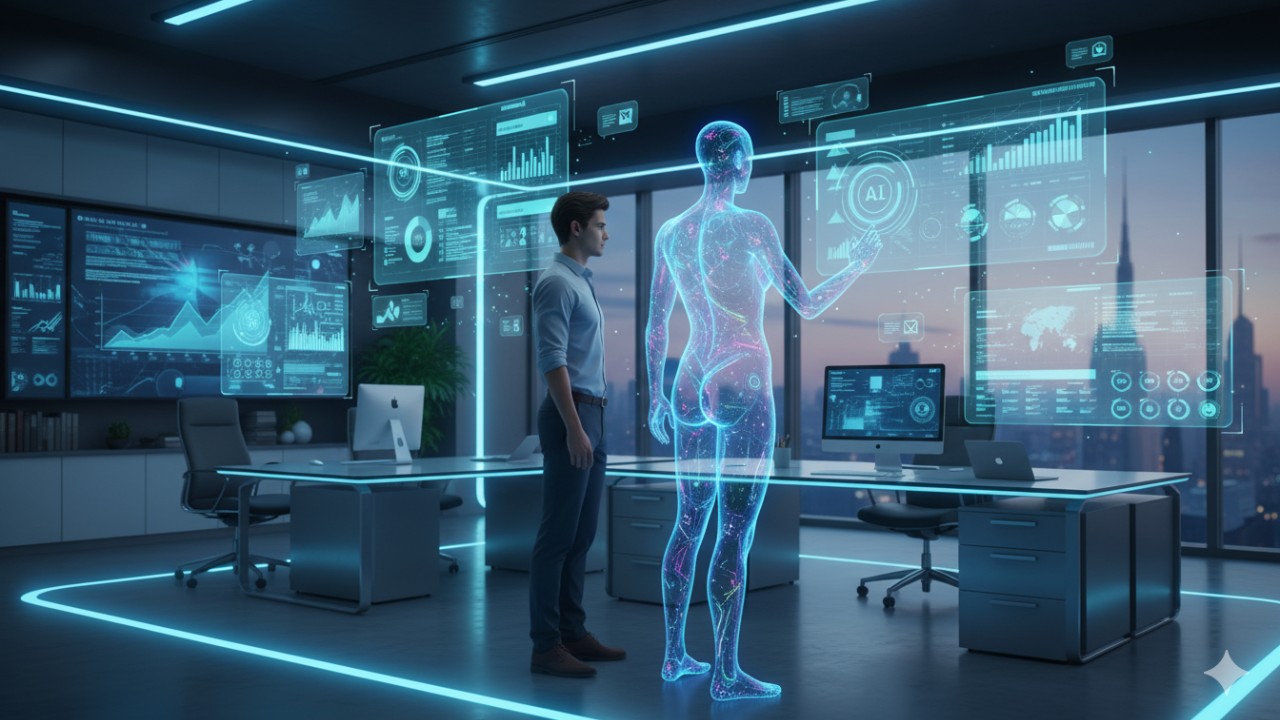
The workplace revolution is no longer a distant future—it’s happening right now. As we approach 2026, AI agents are poised to fundamentally reshape how we work, moving far beyond simple automation to become intelligent digital colleagues that enhance human capabilities in unprecedented ways.
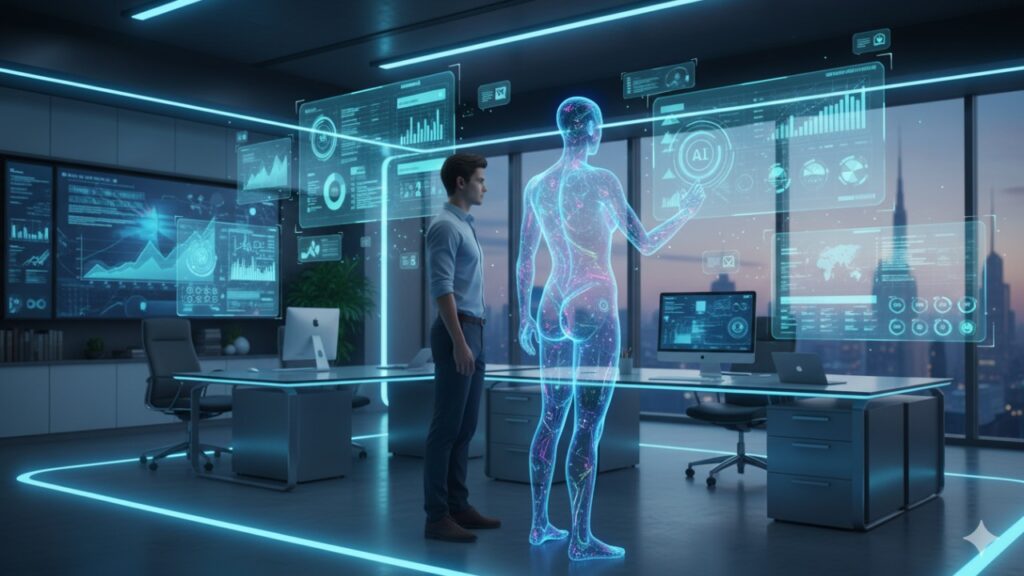
The Rise of Autonomous Digital Workers
Unlike traditional automation tools, AI agents are autonomous systems that can perceive their environment, make complex decisions, and execute tasks independently. These aren’t just chatbots answering simple questions; they’re sophisticated digital assistants capable of handling entire workflows from start to finish. By 2026, experts predict that three-quarters of all jobs will be augmented by AI agents, creating a hybrid workforce where humans and machines collaborate seamlessly.
The impact is already visible. Organizations implementing AI agents are experiencing productivity gains exceeding fifty percent, with some companies reducing software development cycles by sixty percent while simultaneously cutting production errors in half. Financial institutions have reclaimed millions of hours through intelligent automation, while HR departments report productivity increases of nearly fifty percent after deploying AI-driven tools.
Read Also – 1001+ Best Instagram Bio For Boys & Girls
Read Also – 4 Secret Ways To Find Wifi Password Instantly
Your New Digital Team Members
Imagine starting your workday with AI agents that have already triaged your emails, scheduled your meetings, and prepared summaries of overnight developments. One agent might handle market research while another optimizes your content strategy. A third could be monitoring real-time data streams, alerting you only when human judgment is truly needed.
This isn’t science fiction. Software developers are already partnering with AI agents that generate code, conduct testing, and handle debugging, allowing them to focus eighty percent of their time on architecture and creative problem-solving. Marketing professionals collaborate with multiple specialized agents—one for research, another for content creation, and a third for campaign optimization—while they concentrate on strategy and creative direction.
The Shift in How We Work
The transformation goes deeper than task automation. AI agents are redefining the very nature of work itself. Companies are breaking down traditional job roles and creating specialized micro-agents, each mastering a single function. These agents communicate with each other, orchestrating complex workflows that would overwhelm human teams.
Workers who once spent hours on data entry, report generation, and administrative tasks now dedicate that time to strategic thinking, relationship building, and creative problem-solving. The mundane becomes automated, freeing human potential for higher-value work. Research shows that forty-six percent of workers actively welcome AI automation for repetitive, stressful tasks, seeing it as an opportunity to focus on more meaningful work.
Preparing for the New Workplace
As AI agents become workplace standards, sixty percent of workers will need new skills to collaborate effectively with these digital teammates. The emphasis is shifting from information-processing abilities to interpersonal and organizational competencies. Critical thinking, emotional intelligence, and strategic oversight are becoming the most valuable human contributions.
Organizations that embrace this transformation today position themselves for tremendous competitive advantage. Those who hesitate risk being left behind in a rapidly evolving marketplace where speed and innovation matter more than traditional scale. The future of work is being written now, and it’s a future where humans and AI agents combine their unique strengths to achieve outcomes neither could accomplish alone.
The question isn’t whether AI agents will transform your workday by 2026—it’s whether you’re ready to work alongside them.