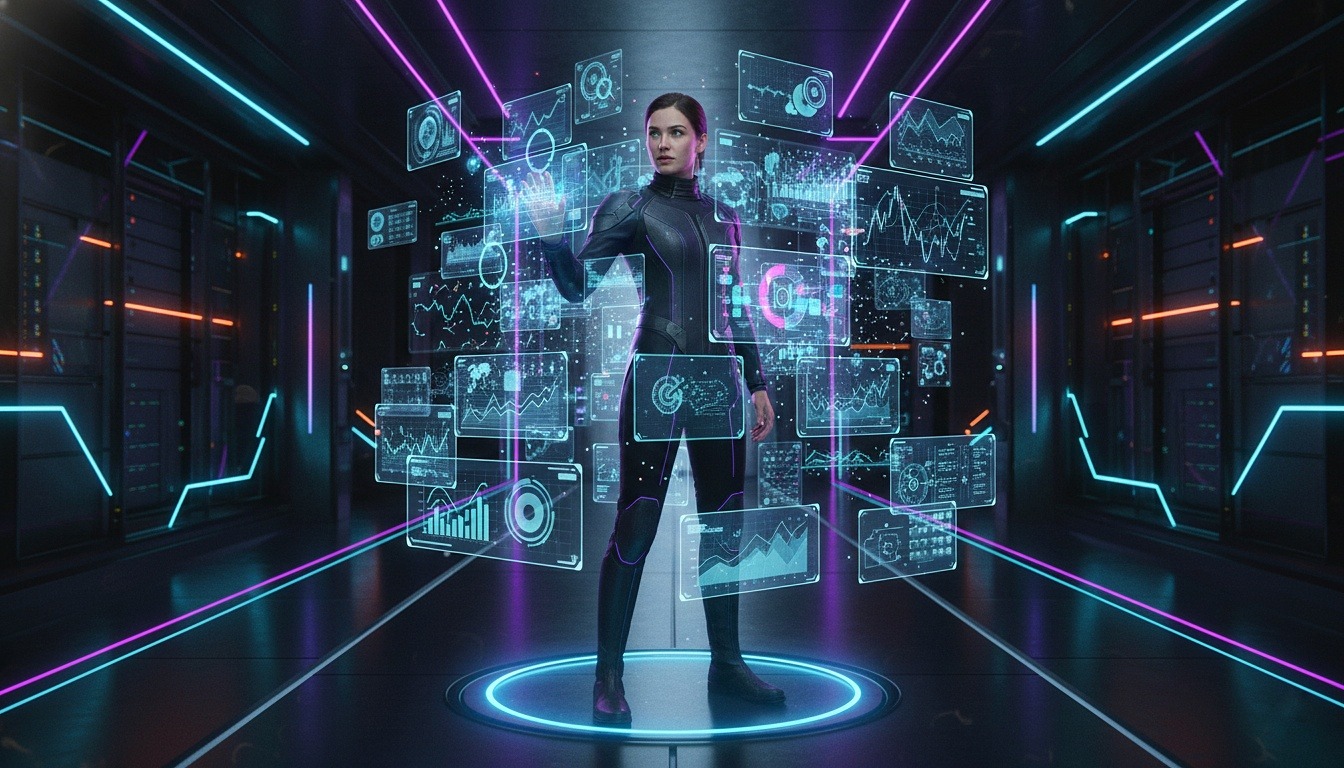
The AI landscape in 2025 has evolved dramatically beyond the mainstream tools most people rely on. While ChatGPT and basic chatbots dominate conversations, a new generation of sophisticated AI platforms is transforming how professionals work, create, and solve complex problems. These advanced tools deliver unprecedented capabilities—from intelligent coding environments to multimodal research systems—that fundamentally change productivity and creative potential.
The Next Generation of AI Assistants: Beyond ChatGPT
ChatGPT-5 remains powerful, but it’s no longer the only player at the table. Claude 4.5 by Anthropic has emerged as the enterprise choice for complex reasoning and regulatory compliance. This AI excels at handling sensitive tasks, policy reviews, and situations requiring transparency. What sets Claude apart isn’t raw speed but exceptional accuracy and the ability to explain its reasoning step-by-step—critical for boardroom decisions and high-stakes analysis.
For real-time intelligence gathering, Perplexity AI represents a seismic shift in how research works. Unlike traditional search engines that return links, Perplexity synthesizes current information from the web into direct, conversational answers with proper citations. Its Deep Research mode can issue hundreds of searches simultaneously, analyzing disparate information and generating fully-cited reports in minutes—saving researchers countless hours. The platform’s Focus Mode lets you filter results by academic papers, videos, or writing-specific content, making it indispensable for students and professionals alike.
Read Also – Best AI Image Generators in 2025
Read Also – Talwiinder Ai Image – Gemini New Trend Ai Images
Revolutionary Coding and Development Tools
If you’re still using generic code editors, Cursor AI deserves your attention. This AI-powered IDE, built on Claude integration, functions like having a senior developer as your pair programmer. What distinguishes Cursor is its deep awareness of your entire codebase, allowing it to refactor large files, generate comprehensive documentation, and debug complex issues without losing context. The development experience feels fundamentally different—less like asking an assistant and more like collaborating with an expert colleague who understands your project architecture.
For teams managing infrastructure and content, Notion AI has transcended simple note-taking. The platform’s custom autofill properties create self-maintaining databases that automatically populate fields based on AI analysis of page content. Imagine a project database that automatically identifies “potential risks” by analyzing each project brief, or a content database generating SEO meta descriptions—all updating in real-time as information changes. (Vid4)
Multimodal Content Creation at Scale
Runway has moved beyond simple video editing into sophisticated generative creation. The latest Gen-4 model allows you to describe changes in natural language—essentially telling the tool to “extend this shot by five frames in a cinematic style” and watching it render high-fidelity video. Act-Two lets you upload actor performances and direct them onto any character, complete with hand-tracking and emotional nuance. This technology democratizes film production, allowing solo creators to achieve studio-quality results.
For audio and voice work, ElevenLabs represents a quantum leap in realism. The platform’s neural network architecture generates speech that captures subtle human nuances—pitch variations, emotional undertones, and natural pacing—in over 70 languages. Voice cloning requires just minutes of sample audio, and the emotion-driven speech features let you tag directives like [excited] or [sighs] directly into text. This isn’t robotic text-to-speech; listeners often can’t distinguish AI-generated voices from human speakers.
AI-Powered Research and Content Management
Google’s NotebookLM transforms how people learn and create content. Upload documents, YouTube videos, or meeting transcripts, and the platform generates podcast-style discussions between AI hosts that synthesize key points. What makes this revolutionary is the quality—listeners report the conversations feel natural, not scripted, because the AI understands context and nuance. For educators and content creators, this feature alone saves hundreds of hours in production time.
The new Google AI Mode in Search represents institutional-level infrastructure thinking. Using query fan-out techniques, it breaks complex questions into hundreds of simultaneous searches, then reasons across results to provide expert-level analysis with live links. For professional researchers and strategists, this means access to research capabilities previously available only through expensive research services.
Why This Matters for Your Workflow
These tools aren’t incremental improvements—they’re categorical shifts in what’s possible. Cursor eliminates entire classes of debugging work. Perplexity replaces days of manual research with instant synthesis. Runway makes video production scalable. ElevenLabs creates content at a fraction of previous costs.
The convergence is powerful: combine Cursor for development, Perplexity for research, Runway for visuals, and ElevenLabs for audio, and you’ve essentially built a production studio operated by AI assistants specialized in their domains. This explains why forward-thinking organizations are adopting these tools—they’re not chasing trends; they’re accessing capabilities that fundamentally change what work looks like.
Conclusion
The gap between basic AI tools and advanced platforms continues widening. While ChatGPT handles general questions competently, specialized tools deliver 5-10x improvements in their domains. Teams and creators who master these platforms won’t just be more productive—they’ll operate in a different efficiency tier entirely. The AI revolution isn’t about having access to AI; it’s about using the right AI for the specific challenge.
For content creators, developers, researchers, and business professionals, 2025 is the year to experiment with these advanced tools. The learning curve is minimal for most, and the productivity gains are immediate. The professionals using Cursor, Perplexity, and Runway today are already competing differently in their markets—and that gap will only expand.y expand.